
A2 Desi Ghee vs Regular Ghee: Understanding the Difference Through Your Plate

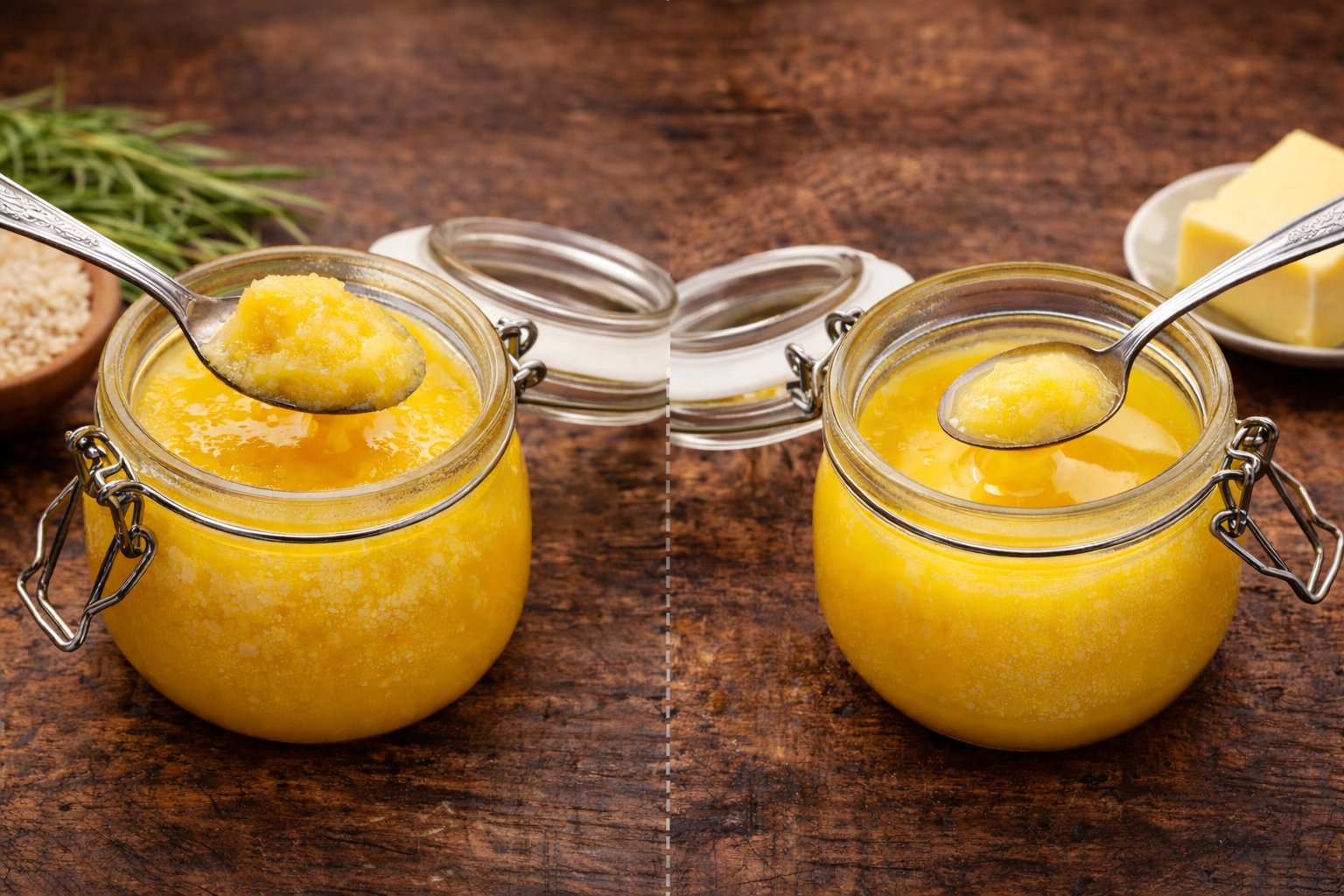
Key Highlights
- Differences between A2 desi ghee and regular ghee appear during cooking, not on packaging
- Aroma release and melting behaviour influence how food feels and tastes
- Where pure desi ghee fits naturally into everyday Indian meals
- Why organic ghee matters for consistent cooking in Dubai kitchens
In Dubai, grocery shelves offer plenty of choices when it comes to ghee. The jars may look similar, but the cooking experience often isn’t. Many home cooks ask a practical question: Will this change how my everyday food turns out?
The answer lies less in labels and more in what happens while you cook. This article looks at A2 desi ghee and regular ghee through aroma, texture, and heat behaviour, the details that show up clearly in daily meals.
Think Less About Labels, More About Behaviour
At its core, ghee is clarified butter. Butter is gently heated until water evaporates and milk solids separate, leaving behind a clear, golden fat.
What changes from one ghee to another is:
- the milk used
- the pace of clarification
- the level of processing
Organic ghee focuses on clean sourcing and minimal handling. From there, preparation style determines how the ghee responds to heat, aroma, and timing in your cooking.
How A2 Desi Ghee Behaves in the Kitchen
Instead of asking what A2 desi ghee claims to be, notice how it behaves.
When you heat A2 desi ghee:
- It melts slowly and evenly
- Aroma builds gently rather than rushing out
- The fat spreads thinly across the pan
In food like rice or dal, this slow release matters. The aroma stays with the dish instead of overpowering it. That’s why many cooks prefer A2 desi ghee for meals where flavour needs time to settle.
How Regular Ghee Feels Different While Cooking
Regular ghee is commonly produced at scale. It still works as a cooking fat, but its behaviour can feel different.
In everyday use, regular ghee often:
- Heats up quickly
- Releases aroma all at once
- Feels heavier if the quantity isn’t adjusted
This doesn’t make it unsuitable. It simply means you need to be more precise, especially in simple dishes where there’s nowhere for excess aroma or fat to hide.
The Everyday Role of Pure Desi Ghee
Pure desi ghee often becomes the middle ground in many homes. When clarified cleanly, it performs consistently across common meals.
In practical cooking:
- It works well on low to medium heat
- Aroma feels familiar and comforting
- Texture stays smooth, not oily
For families in Dubai cooking Indian food several times a week, pure desi ghee offers reliability, rotis stay soft, dal tastes rounded, and reheated meals hold their texture.
Three Everyday Tests That Show the Difference
Instead of comparisons on paper, try these kitchen moments.
Aroma Timing
- A2 desi ghee: aroma unfolds slowly
- Regular ghee: aroma appears quickly
Slow aroma feels warmer and calmer, especially in simple food.
Melting Pattern
- A2 desi ghee: spreads evenly
- Regular ghee: can pool if overheated
This affects how spices bloom during tadka.
Mouthfeel
- Food cooked with A2 desi ghee feels lighter
- Food cooked with regular ghee may feel heavier if used generously
These differences are easiest to notice in rice, dal, and rotis.
Why Organic Ghee Makes a Difference Either Way
Whether you prefer A2 desi ghee or pure desi ghee, organic sourcing helps preserve natural cooking behaviour.
With organic ghee:
- Aroma stays clean
- Heat response remains predictable
- Smaller amounts feel sufficient
This consistency matters in busy Dubai kitchens where meals are cooked quickly and often reheated.
You can explore options in the Homegrown Organic Ghee category here.
The real understanding comes from repeated everyday use, not comparison charts.
Choosing the Right Ghee for Your Routine
There’s no universal answer. The right choice depends on how you cook.
- Choose A2 desi ghee when aroma development is important
- Choose pure desi ghee for balanced, daily meals
- Choose organic ghee when you want predictable results every time
The simplest test is still the best one: cook the same dish twice and notice how it smells, feels, and sits on the palate.
Why This Matters in Dubai
Many households in Dubai:
- Cook Indian food regularly
- Reheat meals for workdays
- Share kitchens and responsibilities
Ghee that behaves consistently makes cooking easier. Rice stays soft, rotis don’t dry out, and aroma remains gentle even after reheating.
That’s why understanding ghee through cooking behaviour, not trends, makes everyday life simpler.
Bringing It All Together
The difference between A2 desi ghee and regular ghee is subtle, but real. It shows up in aroma timing, texture, and how food feels after the first bite.
When you cook with clean, well-prepared organic ghee, and use it thoughtfully, food feels balanced and familiar again. Whether you lean toward the gentle build of A2 desi ghee or the steady reliability of pure desi ghee, the answer always appears on the plate.
That’s where trust begins.
Frequently Asked Questions
1. Is A2 desi ghee suitable for daily meals?
Yes. A2 desi ghee works well daily, especially for dishes where aroma develops gradually.
2. Can pure desi ghee be used every day?
Pure desi ghee is practical for everyday Indian cooking when used in small amounts.
3. Does organic ghee cook differently from non-organic ghee?
Organic ghee melts more evenly and responds predictably on low to medium heat.
4. How do I know which ghee suits my cooking best?
Cook the same dish with each type and observe aroma, texture, and mouthfeel.