
Identifying Pure Spices (Aroma, Colour, Texture)

Key Highlights
- Pure spices can be identified before cooking by using your senses — calm aroma, natural colour, and clean, dry texture
- Organic spices behave predictably on heat, allowing flavours to bloom gently instead of burning or clumping
- Clean turmeric powder adds warmth and balance without bitterness, while black salt lifts flavour quietly when used at the right stage
- Recognising spice purity reduces the need for extra oil, salt, or overcooking, making everyday meals more consistent and reliable
Most people try to judge spices after cooking.
That’s already too late.
Pure spices reveal themselves much earlier — when you open the jar, when you rub them between your fingers, and when they first meet gentle heat. This guide helps you recognise organic spices using simple sensory cues, so you don’t need guesswork or labels to tell you what’s real.
This article is part of our larger guide on “All About Organic Spices – Recipe & Purity Guide”, where we explain the full picture.
A Simple Way to Think About Purity
Instead of asking “Is this spice organic?”, ask:
- Does it smell calm or sharp?
- Does the colour look natural or forced?
- Does the texture feel clean or artificial?
If a spice passes these three checks, it usually behaves well in cooking.
Aroma: The First and Most Honest Signal
Aroma tells you how a spice was grown, dried, and handled.
With pure, organic spices:
- The smell is immediate but gentle
- There’s no sting in the nose
- Each spice smells distinct, not generic
Turmeric powder should smell warm and earthy, never dusty or sour.
Black salt should carry a soft mineral aroma, not a chemical sharpness.
If the aroma feels aggressive, the spice often needs “fixing” later with extra oil or salt — a clear sign of poor processing.
Fact 1: Processing Impacts Spice Aroma
Grinding spices fresh preserves volatile oils and antioxidants that degrade rapidly in pre-ground versions. University of California research shows ground spices lose 50% flavor within six months.
Colour: Natural Variation Is a Good Sign
Pure spices don’t aim for perfection.
Organic spices show:
- Deep but muted colour
- Slight variation between batches
- No glossy or neon finish
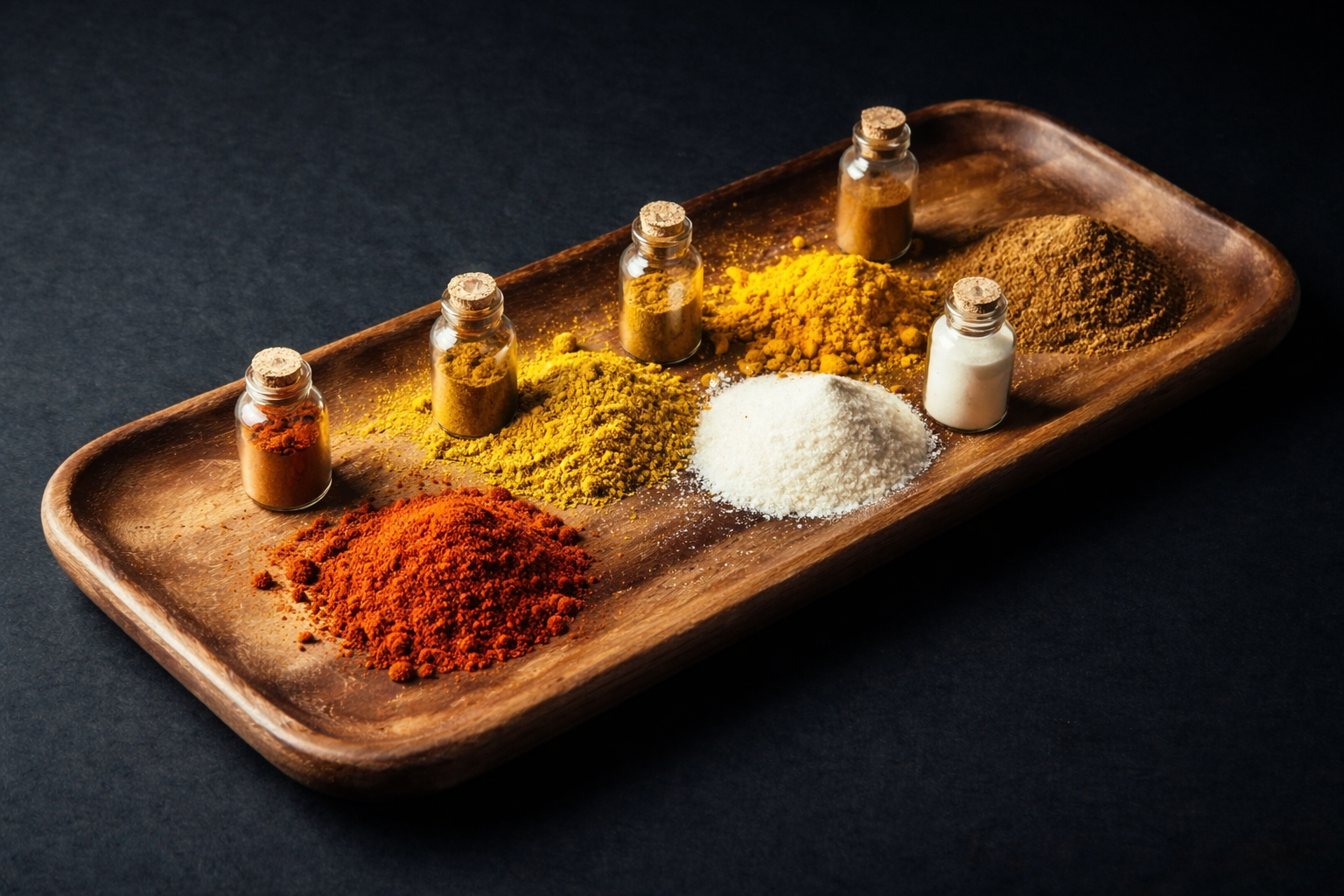
Turmeric powder is a good example. Real turmeric is deep golden, sometimes slightly dull — never fluorescent yellow. Overly bright colour usually comes from aggressive processing or additives.
Colour should blend into food, not sit on top of it.
Texture: What Your Fingers Can Tell You
Texture is often overlooked, but it predicts cooking behaviour.
When you touch organic spices:
- They feel dry, not sticky
- They crumble easily
- There’s no grit or clumping
Black salt should break down naturally between your fingers. If it feels overly smooth or damp, it often dissolves unevenly in food.
Good texture means spices will bloom evenly instead of burning or clumping.
What Happens When Pure Spices Hit Heat
Once spices meet warm oil or ghee, purity becomes obvious.
With organic spices:
- Aroma opens gradually
- Colour spreads evenly
- Spices don’t scorch instantly
Turmeric powder blends into fat smoothly instead of darkening in patches. Black salt dissolves cleanly when added at the end, lifting flavour instead of leaving sharp bites.
This calm behaviour is what allows simple food to taste balanced.
A Quick Home Test You Can Try Today
Take two small bowls.
- Add warm water to each
- Sprinkle a pinch of turmeric powder into both
Pure turmeric disperses slowly and evenly. Poor-quality turmeric clumps or sinks unevenly.
This simple test mirrors how the spice will behave in real cooking.
Why This Matters in Dubai Kitchens
Many households in Dubai:
- Cook in short windows
- Reheat meals later
- Share kitchens with family
When spices behave unpredictably, food quality drops quickly after reheating. Organic spices hold aroma and balance better, which keeps meals tasting stable throughout the day.
This is especially noticeable with turmeric-based dishes and black salt–finished foods.
Fact 2: Sensory Cues Drive Cooking Decisions
A study provides evidence that in the context of cooked rice consumption, color cues can elicit associated aromas and modulate consumer perception, acceptance, and evoked emotions to cooked rice.
These findings explain why your senses are the most reliable purity check.
Where Turmeric Powder and Black Salt Fit Best
- Use turmeric powder early in cooking, allowing it to blend gently
- Use black salt at the end, where its clean mineral note can lift the dish
When both are pure, they don’t compete — they support.
Bringing It All Together
Pure spices don’t demand attention.
They earn trust quietly.
When organic spices are clean, turmeric powder adds warmth without bitterness, and black salt enhances flavour without noise. Cooking becomes simpler because you stop correcting and start trusting.
That’s when your food begins to taste like it should — steady, familiar, and balanced. Need to know more about organic spices? Read our complete blog here.
Frequently Asked Questions
1. Can I identify pure spices without lab testing?
Yes. Aroma clarity, natural colour, and dry, fine texture are reliable indicators.
2. Why does turmeric powder sometimes taste bitter?
Bitterness often comes from overheating or heavy processing during drying.
3. Is black salt supposed to smell strong?
No. A gentle mineral aroma is a sign of purity.
4. Will organic spices change how much seasoning I use?
Usually yes — because flavour spreads evenly, smaller amounts are enough.