
Choosing the Right Organic Flour for Rotis, Dosas & Baking

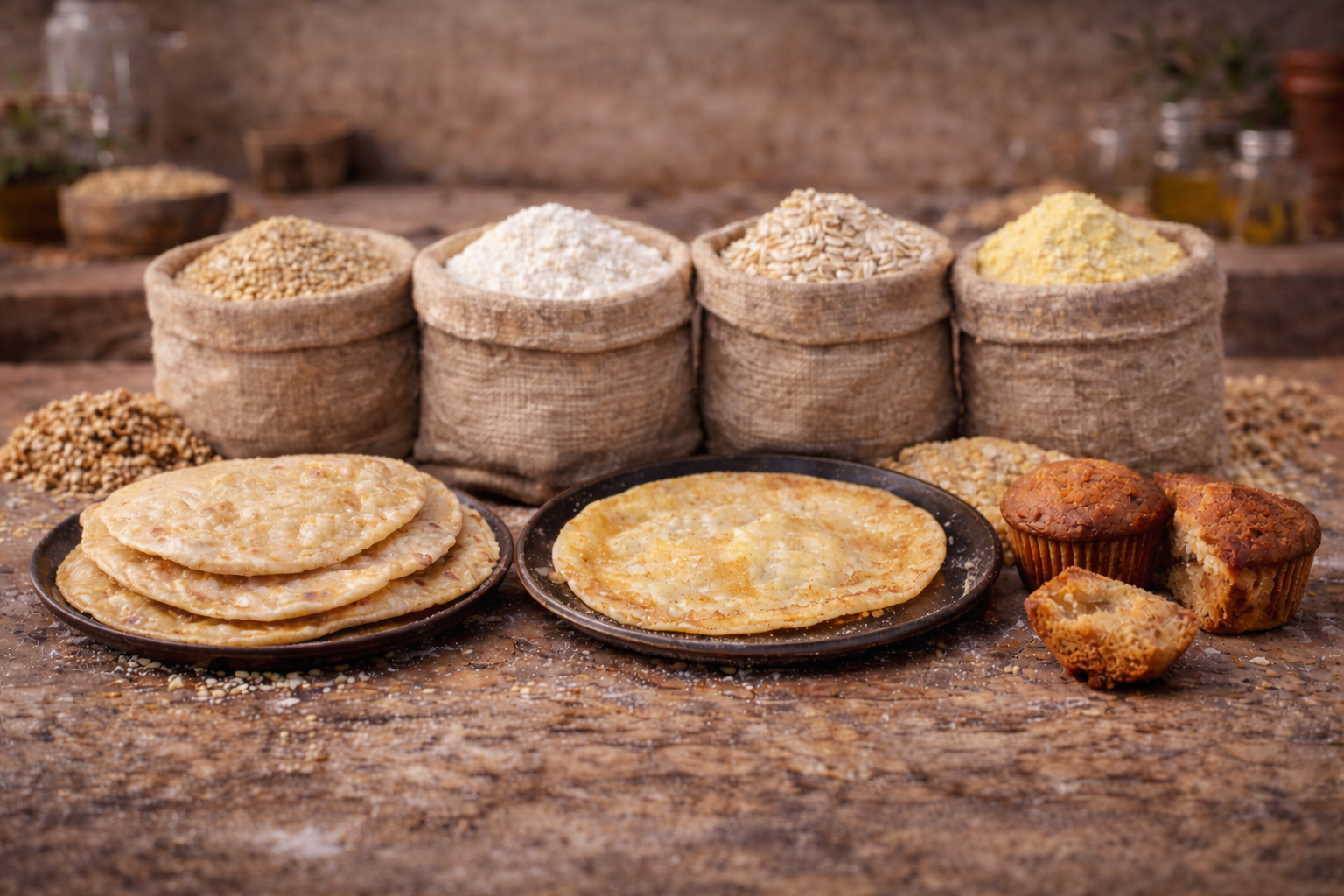
Key Highlights
- Rotis need hydration and rest more than stretch
- Batters depend on spread and fermentation
- Baking requires structure before softness
- Matching flour to the dish simplifies cooking
Most flour confusion doesn’t start at the shop.
It starts in the kitchen.
A roti that feels dry.
A dosa that won’t spread.
A bake that looks fine but eats heavy.
The flour isn’t wrong, it’s just being used for the wrong job.
Different dishes ask different things from flour. Some need softness, some need structure, some need crispness. Once you match flour to the dish instead of forcing one flour to do everything, cooking becomes easier and more predictable.
Rotis: Softness Comes From Hydration, Not Stretch
Rotis are where most people feel unsure about using anything other than wheat.
That’s because wheat flour stretches easily, making it forgiving to roll. But stretch is not the same as softness.
Millet flours like barnyard millet flour, foxtail millet flour, and little millet flour don’t stretch the same way. Instead, they rely on:
- Proper hydration
- Adequate resting
- Gentle rolling
When handled this way, millet rotis cook into a soft, tender texture with a gentle bite. They won’t puff exactly like wheat, and that’s fine. The softness shows up when you eat them, not while rolling.
If rotis feel dry, the answer is usually more rest — not more flour.
Dosas & Batters: Spread and Fermentation Matter More Than Dough Feel
Dosa batters behave very differently from roti dough, so flour choice matters even more here.
Organic rice flour is commonly used because it spreads well and crisps beautifully when fermented and cooked. Its behaviour shows up on the pan, not in the bowl.
Millet flours can also work well in batters, but they absorb water more slowly. Batters made with foxtail millet flour or barnyard millet flour benefit from:
- Slightly higher hydration
- Longer resting or fermentation
- Gentle mixing
The reward is a dosa that feels lighter, with a more rounded flavour.
Judging a batter too early is the fastest way to get frustrated. Let time do part of the work.
Baking: Structure First, Then Softness
Baking asks more precision from flour than stovetop cooking.
Flours like oats flour bring softness and moisture to baked goods. They absorb water gradually and continue softening after resting, which helps with texture.
Maize flour behaves differently. It absorbs water quickly and sets into a firmer structure. This makes it useful when you want body rather than lightness.
Millet flours can be used in baking, but they shine best when you’re aiming for:
- Density rather than fluff
- A slightly crumbly texture
- A fuller, grain-forward taste
The key is not expecting bakery-style softness from every bake. Let the flour decide the outcome.
Everyday Cooking: One Flour Doesn’t Need to Do Everything
A common mistake is trying to use one flour for every dish.
That usually leads to compromises:
- Rotis feel dry
- Dosas feel thick
- Bakes feel heavy
Instead, think in roles:
- One flour for rotis
- One for batters
- One for baking
You don’t need many. You just need the right match.
Once you stop forcing flours to behave the same way, cooking becomes calmer and more intuitive.
Texture Is Judged on the Plate, Not in the Bowl
This is worth repeating.
Millet flours often feel unimpressive before cooking. Dough may feel soft or slightly fragile. Batters may feel thicker than expected.
That doesn’t predict the final result.
Heat completes the structure for millet flours. What matters is how the food feels when eaten — not how the dough felt while mixing.
If you judge too early, you’ll always feel unsure.
A Simple Way to Decide
When choosing flour, ask:
- Does this dish need stretch or softness?
- Does it need crispness or structure?
- Does it cook on a pan or bake in an oven?
Answering those questions usually points you to the right flour without overthinking.
This article is part of our larger guide on Organic Flour in the UAE – How Texture, Absorption & Taste Really Change Cooking, where we explain the full picture.
Frequently Asked Questions
1. Can I use millet flour daily for rotis?
Yes, as long as you hydrate well and allow enough resting time.
2. Why do my dosas feel thick with millet flour?
Millet flours absorb water slowly. Higher hydration and rest help.
3. Is one flour enough for all cooking?
It can work, but results improve when flours are matched to dishes.
4. Do I need new recipes for different flours?
Usually no. Small handling changes make a bigger difference than new recipes.