
Cold-Pressed vs Refined Oils – What Changes in Taste?

Key Takeaways
- Cold-pressed oils retain natural aroma and flavour.
- Refining removes identity, not just impurities.
- Heat behaviour is more intuitive with organic oils.
- Taste improves without changing recipes.
Most people think cooking oil is meant to be invisible. If it doesn’t smell, doesn’t change colour, and doesn’t leave a trace on the food, it must be “good.” But that idea comes from modern processing, not from how oils have traditionally behaved in real kitchens.
The difference between cold-pressed and refined oils is not abstract. It shows up clearly in taste, aroma, and how food responds to heat. Once you notice it, it’s hard to un-notice.
This article explains what actually changes when oil is refined — and why cold-pressed organic oils taste the way they should.
What Does “Cold-Pressed” Really Mean?
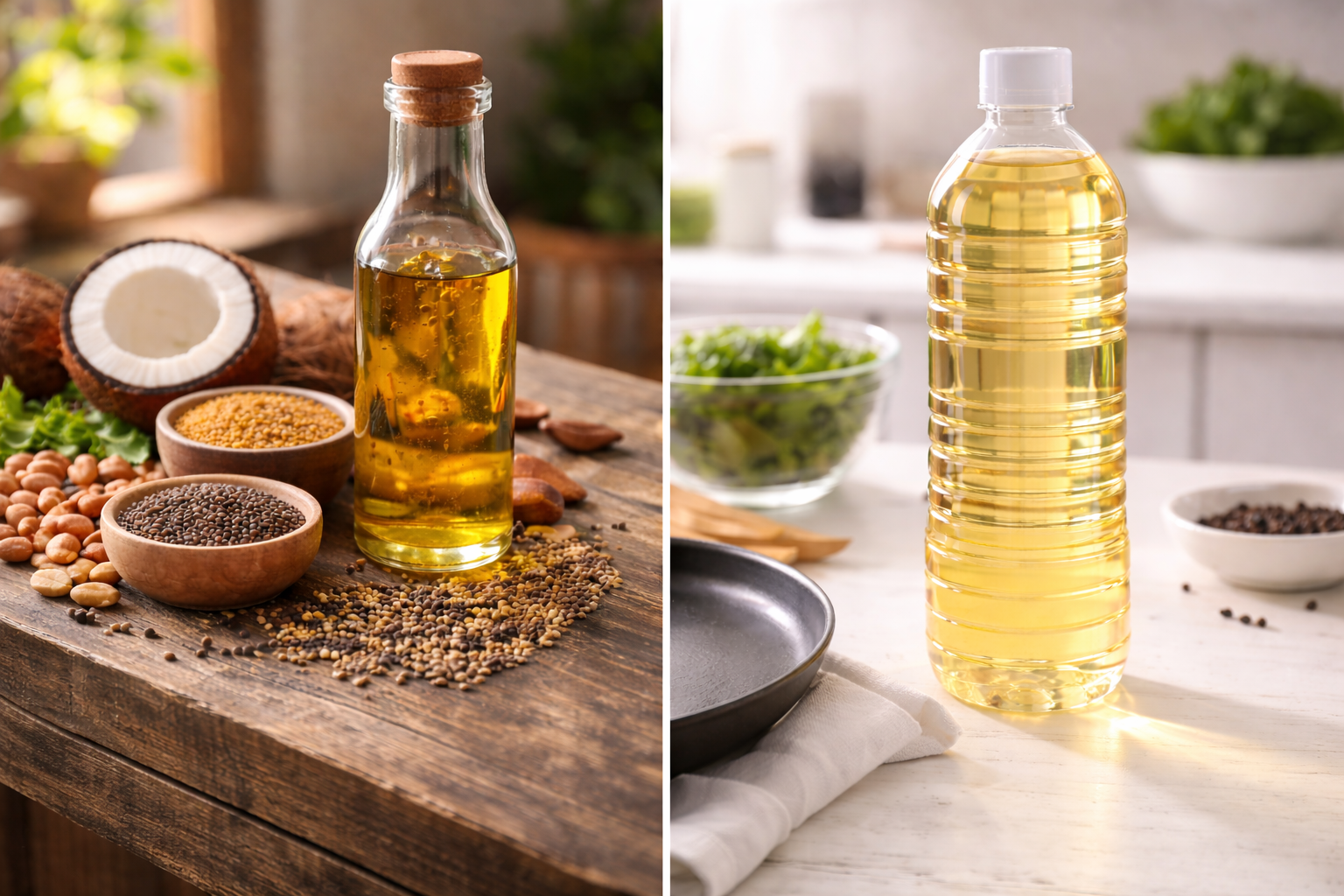
Cold-pressed oil is made by mechanically pressing seeds or nuts at low temperatures. There is no chemical extraction, no bleaching, and no deodorising. The oil that comes out carries the natural aroma, colour, and flavour of the source ingredient.
Refined oil follows a very different path. After extraction, it is treated to remove smell, colour, and taste so it looks and feels uniform. This makes the oil shelf-stable and neutral — but also strips away its character.
This is why cold-pressed organic edible oils often look slightly darker and smell more noticeable. Nothing has been taken away.
How Refining Changes Taste (Even When You Don’t Notice It)
Refining doesn’t just remove impurities. It removes volatile compounds — the same compounds responsible for aroma and depth of flavour.
When refined oil heats up:
- There is little to no aroma
- Spices bloom quietly
- Food relies entirely on added ingredients for taste
When cold-pressed oil heats up:
- Aroma rises immediately
- Spices release their natural oils faster
- The dish develops a more rounded flavour base
For example, organic groundnut oil brings a subtle roasted note that supports everyday curries and sabzis. Organic coconut oil releases a gentle sweetness when warmed, which changes how vegetables and spices come together.
These are not strong flavours. They are background notes — the kind that make food taste complete.
Why Cold-Pressed Oils Behave Differently on Heat
A common concern is smoke point. Many people assume refined oils handle heat better. In reality, heat behaviour depends on how the oil is used, not just its processing.
Cold-pressed oils respond more actively to heat. They warm up quickly, release aroma early, and let you know when the pan is ready. This makes them ideal for tempering, sautéing, and controlled frying.
Refined oils stay quiet even when overheated. This can lead to cooking at unnecessarily high temperatures, which flattens flavour rather than improving it.
When using organic mustard oil, for example, the initial sharp aroma tells you exactly when the oil is hot enough. As cooking continues, that sharpness mellows, leaving depth behind. That feedback is part of traditional cooking intuition.
Colour, Aroma, and Mouthfeel: Small Details That Matter
Cold-pressed oils often have a visible tint. That colour comes from natural compounds in seeds and nuts. Refining removes these to create a uniform, pale appearance.
These compounds also affect mouthfeel.
Food cooked in cold-pressed oil tends to feel:
- More rounded
- Less greasy
- Better integrated with spices
This is especially noticeable with lighter oils like organic sunflower seed oil, which supports ingredients without dominating them. It doesn’t disappear, it supports.
Why Neutral Isn’t Always Better
Neutral oils are useful in certain contexts, but neutrality should be a choice, not the default.
When oil has no aroma or taste, the entire burden of flavour falls on spices and salt. This often leads to heavier seasoning, not better cooking.
Cold-pressed oils do part of the work naturally. They create a flavour base before anything else enters the pan.
That’s why food cooked with organic oils often tastes balanced with fewer adjustments. Nothing is missing.
Interesting Statistics: The top three cold pressed oil types — sunflower, olive, and coconut — collectively account for 52% of total global market consumption.
Making the Switch Without Changing Your Cooking
Switching from refined to cold-pressed oils does not require new recipes or techniques.
Start by:
- Using the same quantity of oil you normally would
- Paying attention to aroma as the oil heats
- Letting spices bloom instead of rushing the process
You’ll notice that dishes reach flavour faster and feel more complete.
This article is part of our larger guide on Understanding Organic Cooking Oils – Taste, Smoke Point & Everyday Use, where we explain the full picture.
Frequently Asked Questions
1. Do cold-pressed oils taste very strong?
No. They have a natural aroma that settles during cooking and supports flavour rather than overpowering it.
2. Can cold-pressed oils be used for everyday cooking?
Yes. They are ideal for daily sautéing, tempering, and frying.
3. Why does refined oil feel lighter?
Because aroma and flavour compounds have been removed, not because it is better suited for cooking.
4. Is colour in oil a bad sign?
No. Natural colour is a sign that the oil hasn’t been heavily processed.