
How to Identify Fresh, Minimally Processed Flour

Key Highlights
- Fresh flour has a mild, natural grain aroma
- Slight colour variation is a good sign
- Texture should feel alive, not silky
- Resting reveals how minimally processed flour behaves
Flour rarely gets questioned.
If it looks fine, pours easily, and makes dough, we assume it’s doing its job. But flour is one of those ingredients that quietly tells you a lot — if you know how to notice.
Fresh, minimally processed flour behaves differently from heavily refined flour. It smells different, absorbs water differently, and cooks differently. These aren’t dramatic differences. They’re subtle. But once you notice them, you start trusting your hands and senses more than labels.
Here’s how to tell.
The First Check Happens Before You Cook Anything
Open the packet. Before adding water, before kneading, before measuring.
Just smell it.
Fresh, minimally processed organic flour smells faintly grain-like. Sometimes nutty. Sometimes mildly sweet. Never strong, but never completely blank either.
If the flour smells dusty, flat, or like nothing at all, that’s a sign it’s either old or heavily processed.
This applies across flours — whether it’s barnyard millet flour, foxtail millet flour, kodo millet flour, or little millet flour. Real grain has a quiet aroma. When that disappears, something has usually been removed.
Colour Is Not Meant to Be Perfect
We’ve been taught that good flour looks uniform and pale. That expectation comes from refinement, not freshness.
Minimally processed flour often shows variation:
- Slight differences in shade
- A natural off-white, beige, or light brown tone
- Small specks from the grain itself
For example, proso millet flour may appear lighter than kodo millet flour, and barnyard millet flour may look slightly uneven from batch to batch. This isn’t inconsistency — it’s honesty.
Perfect whiteness and complete uniformity usually mean the flour has been processed to look the same every time.
Touch Tells You More Than You Expect
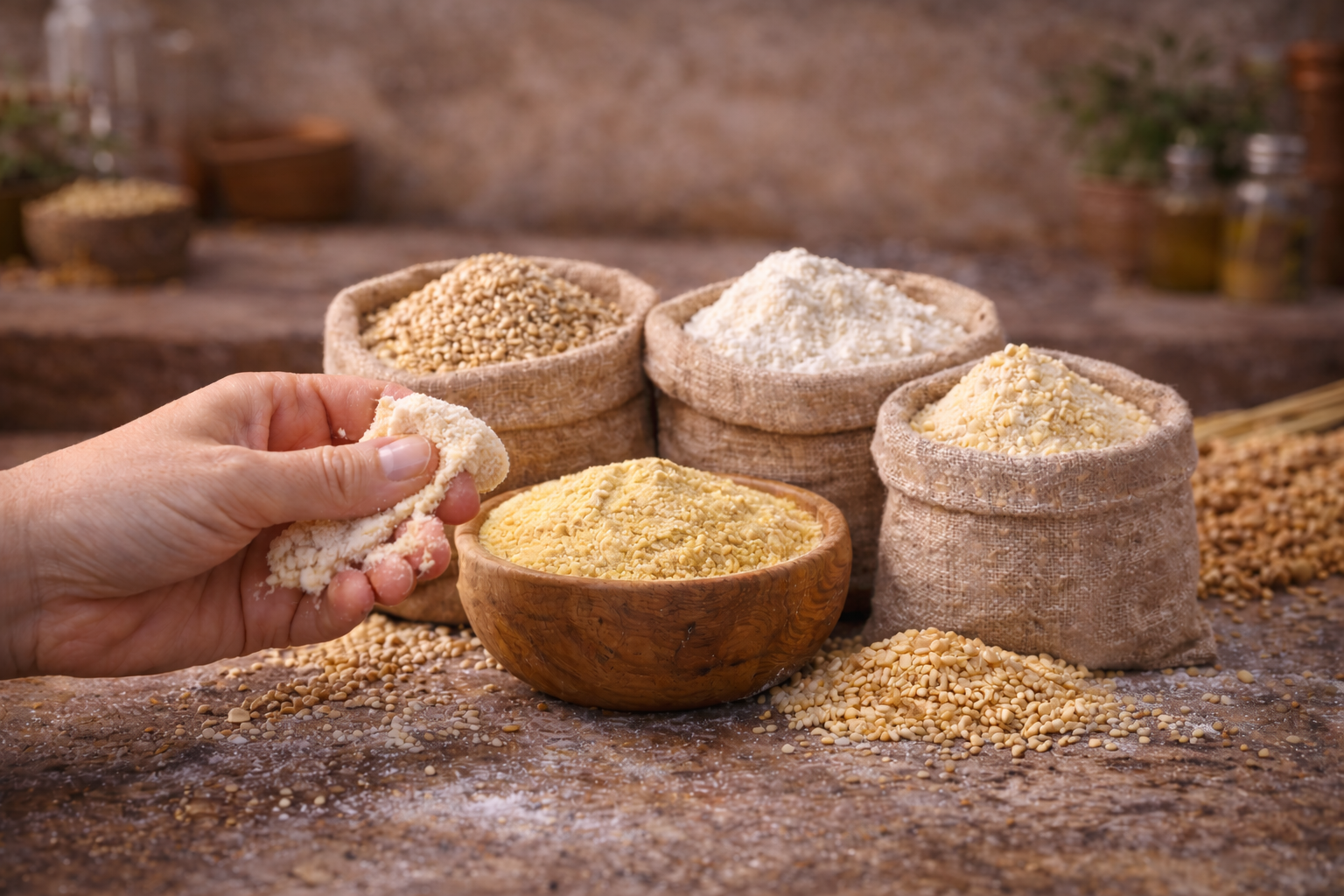
Take a pinch of flour and rub it gently between your fingers.
Fresh flour feels slightly grainy. Not rough — just alive. There’s resistance. Texture.
Heavily refined flour feels silky smooth, almost like powder. That smoothness comes from removing bran and fibre — the very parts that influence absorption and cooking behaviour.
This difference becomes obvious with flours like maize flour and oats flour, where texture directly affects how dough or batter behaves later.
Texture isn’t a flaw. It’s information.
Add Water and Don’t Rush the Result
One of the clearest signs of minimal processing shows up the moment water enters the picture.
Fresh organic flour doesn’t absorb water instantly. At first, it may look patchy or uneven. Give it time.
After resting, the dough or batter smooths out naturally. The flour continues to hydrate, and the texture settles.
Highly processed flour absorbs water immediately and looks “ready” right away — but it doesn’t change much after resting.
This slow change is especially noticeable with organic rice flour in batters, and with millet flours in doughs. Fresh flour evolves. Refined flour stays the same.
Resting Reveals What the Flour Is Capable Of
Here’s a simple test.
Mix flour and water.
Leave it alone for 10–15 minutes.
Come back and feel it again.
Fresh flour will feel different — softer, more cohesive, easier to handle. That change tells you the grain is still active.
If nothing changes after resting, the flour has very little left to give.
This is why resting matters so much with minimally processed flours. Time completes the process that refinement tries to shortcut.
Shelf Life and Freshness Are Not the Same Thing
A long shelf life often means the flour has been processed to stay stable, not flavourful.
Minimally processed flours still contain natural oils and grain components. Over time, these fade — even if the flour is technically safe to use.
That’s why freshness shows up first in:
- Aroma
- Dough feel
- Cooking behaviour
- Final taste
Not on the expiry date.
What Fresh Flour Does for Your Cooking
When flour is fresh and minimally processed:
- Dough hydrates evenly
- Rotis stay softer after cooking
- Batters ferment and spread better
- Flavour feels fuller without extra effort
When flour is old or over-processed:
- Dough feels unpredictable
- Food cooks unevenly
- Taste feels flat or dry
The recipe hasn’t changed. The ingredient has.
Learning to Shop With Your Senses
Instead of asking whether flour is “very fine” or “very white”, start asking:
- Does it smell like grain?
- Does it feel textured, not silky?
- Does it change after resting?
Those answers matter more than any description on the pack.
This article is part of our larger guide on Organic Flour in the UAE – How Texture, Absorption & Taste Really Change Cooking, where we explain the full picture.
Frequently Asked Questions
1. Can flour go stale even if it hasn’t expired?
Yes. Aroma and cooking behaviour fade before safety does.
2. Is graininess in flour a bad thing?
No. It usually means the flour hasn’t been over-refined.
3. Why does fresh flour behave better after resting?
Because water absorption continues over time in minimally processed flour.
4. Do all flours show freshness the same way?
No. Each flour reveals it differently, but aroma and hydration are reliable cues.